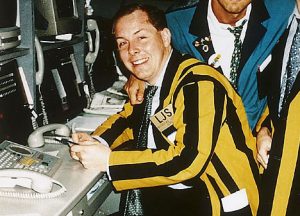
Nick Leeson brought down Barings Bank in 1995 after racking up huge losses through unauthorized derivative trading in Singapore. Initially seen as a star trader, the Kobe earthquake saw the Nikkei 225 plummet and Leeson’s unauthorized trades rack up large losses which were concealed in the now infamous 88888 error account. Unfortunately these unhedged positions became so large (over 1 Billion USD) that Barings Bank collapsed.
The immediate aftermath of the Barings Debacle raised the question of why a relatively small merchant bank had a trading operation in a far-flung place so far away from its London head office.
It is a fascinating story that had a huge impact for not just me, Chris Gillie, but thousands of traders worldwide, in particular those working in smaller financial centers.
The Consequences Barings Collapse Had On Bank Trading Floors
Shocked by Barings Bank collapse, other banks began looking at their trading operations all around the world. Why have twenty trading rooms, thus increasing the risk of a rogue trader or a financial loss when you could do the same with three trading floors, one in each of the time zones and make the other centers into sales rather than trading operations.
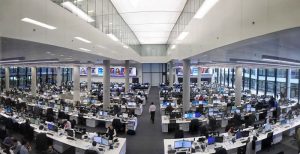
The repercussions for many banks were swift
At the time, I was working for a large European Bank, trading the DEM and CAD deposit books through FX Swaps, FRA’s and cash. The bank had trading rooms all over the place, including San Francisco, Wellington, and even Bahrain. Our trading room was in one of the bank’s offshore operations.
Within months, we were told to square all our open positions and explained all our lending limits would be transferred to the head office as the bank sought to streamline its trading operations. Our trading room was scaled down, and the traders, including me,had to find new jobs.
The Barings collapse was an instrumental factor in forcing banks to move towards operating a single global trading book that is passed around the world as the trading day moves through the major time zones of Tokyo, London, and New York.
Lessons Were Not Learned As History Repeats Itself
Following the Barings collapse and the impact it had on how banks trade, it was not until the 2008 financial crisis that banks would again come under pressure. Subprime mortgage loans were offered to borrowers who in reality would struggle to make the mortgage repayments and that was before U.S. interest rates rose causing property owners to default on their mortgages. It was further compounded as these subprime loans were packaged with lower risk debt into Mortgage-Backed Securities (MBS) by banks; instruments that contained much higher risk than was broadly understood.
Like Barings, respected names like Lehman Brothers, Bear Sterns and Merrill Lynch would collapse. Banks had not learned their lesson.
Written by Chris Gillie

Chris Gillie is the founder of Axcess FX, a forex software review and research website. He is a former investment banker who worked in FX Sales on the UBS London trading floor. Chris has been using forex trading software as part of his trading set-up since the late 2000s and the embryonic days of MetaTrader and the MQL coding language.